QJ 215 N2PHAS
Four-Point Contact Bearings Ball Bearings
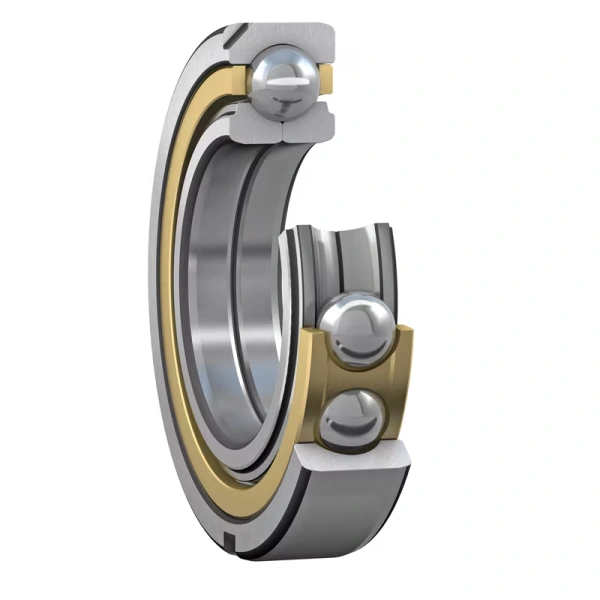

Image may differ from product. See technical specification for details.
Basic Information
Main Dimensions
Inner Ring Dimensions
Outer Ring Dimensions
Performance
Materials
Environment & Compliance
- Fast delivery
- Enjoy discounts on bulk purchases
- Secure Payment
- Fast Global Shipping
QJ 215 N2PHAS Bearing Product Overview & Core Advantages
The QJ 215 N2PHAS is a Four Point Contact Ball Bearing designed for exceptional performance in demanding applications. This single row bearing is engineered to simultaneously withstand combined loads, including significant radial loads and axial loads in both directions, within a compact cross-section. Its P6 (ABEC-3) tolerance class ensures high running accuracy, making it an ideal choice for high-precision, high-reliability systems requiring high rigidity and efficient operation.
QJ 215 N2PHAS Bearing Model Code Explained, Specifications & Naming Convention
| Suffix | Technical Meaning |
|---|---|
| N2 | Indicates snap ring grooves on the outer ring, facilitating secure axial location and simplified housing design. |
| P | Specifies a P6 tolerance class (equivalent to ABEC-3), ensuring high precision and consistent performance. |
| H | Signifies a hardened bearing, providing increased durability and resistance to wear. |
| A | Denotes an optimized internal geometry with a 30° contact angle, enhancing axial load capacity. |
| S | Identifies the bearing as being manufactured from stainless steel, offering enhanced corrosion resistance. |
QJ 215 N2PHAS Bearing Structural Features & Performance Benefits
- Four Point Contact Design: The unique raceway geometry allows the bearing to handle combined radial and axial loads from any direction with a single bearing, simplifying assembly and saving space.
- High Rigidity & Load Capacity: The robust construction and 30° contact angle provide high resistance to deformation under load, ensuring precise shaft positioning. With a dynamic load rating of 28,125 lbf and static load rating of 29,700 lbf, it is built for demanding applications.
- High-Speed Capability: The lightweight and durable PEEK (Polyetheretherketone) cage minimizes centrifugal forces, reduces friction, and contributes to a high limiting speed of 8,500 rpm.
- Precision & Longevity: Manufactured to P6 tolerance and from high-grade chrome steel components, this bearing ensures smooth, quiet operation and extended service life. The snap ring grooves (N2) enhance mounting stability.
QJ 215 N2PHAS Bearing Typical Application Areas
The QJ 215 N2PHAS is ideally suited for applications requiring high precision, compact design, and the ability to handle complex loads. Key industries and equipment include:
- Robotics and Automation: Robot arm joints, rotary actuators.
- Aerospace: Actuation systems, flight control surfaces.
- Machine Tools: Rotary tables, indexing heads, and high-precision spindles.
- Medical Equipment: CT scanners, MRI machines, and surgical robots.
- Radar and Communication Systems: Antenna positioning systems.